

Early periodontal disease is a common yet often ignored oral health condition that begins with subtle symptoms. Many people fail to notice the early periodontal changes in their gums because they are usually painless at first. However, ignoring these signs can lead to serious complications, including tooth loss and damage to the supporting structures of the teeth.
Understanding early periodontal disease is essential for maintaining good oral hygiene and preventing long-term damage. By identifying the early periodontal symptoms and taking timely action, individuals can protect their gum health and avoid more severe stages of the disease.
What is Early Periodontal Disease?
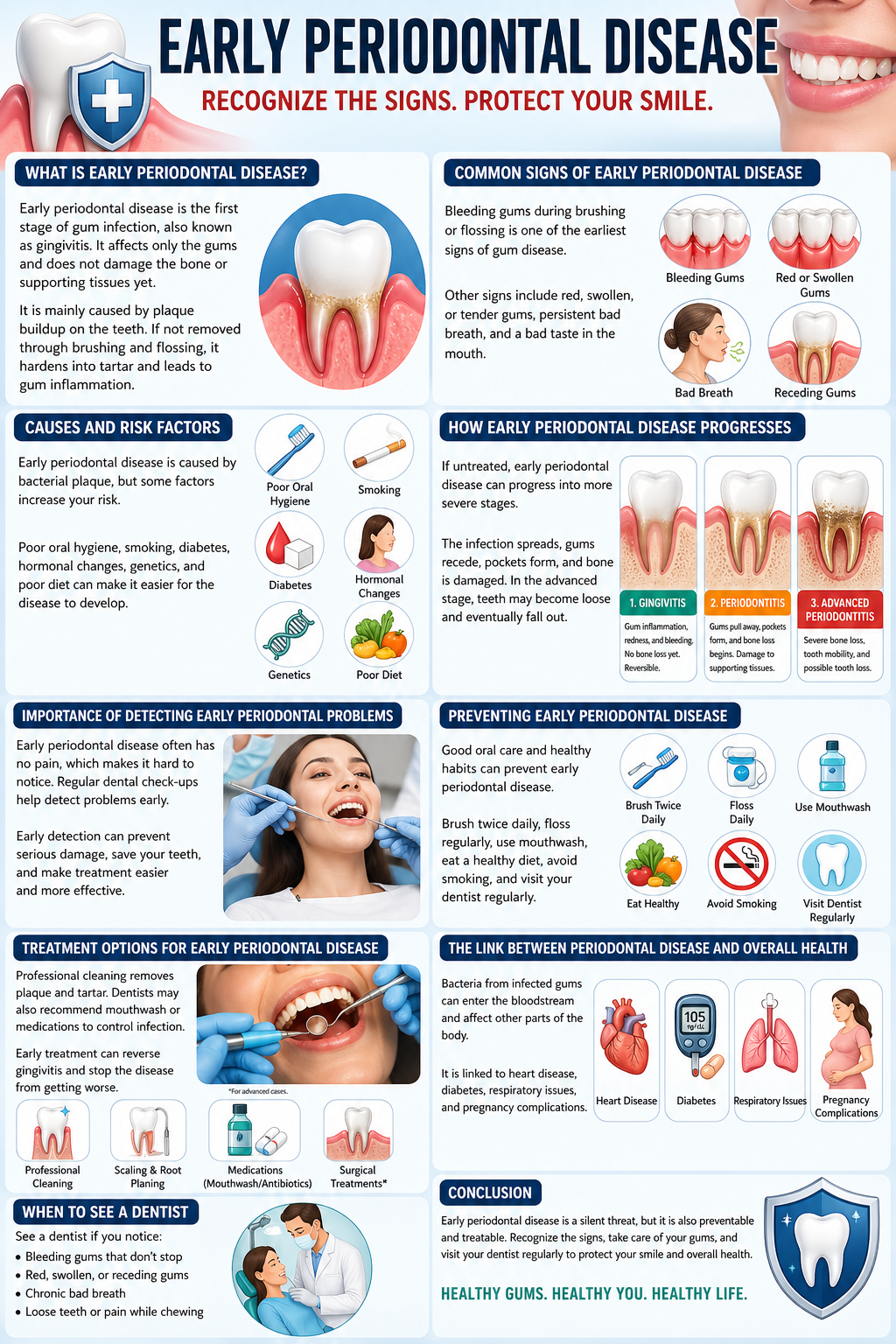
Early periodontal disease refers to the initial stage of gum infection, commonly known as gingivitis. At this stage, early periodontal damage is limited to the gums and does not yet affect the bone or connective tissues supporting the teeth. This makes early detection and treatment highly effective in reversing the condition.
The main cause of early periodontal disease is the buildup of plaque, a sticky layer of bacteria that forms on teeth. When plaque is not removed through proper brushing and flossing, it hardens into tartar, which further irritates the gums and accelerates early periodontal inflammation.
Common Signs of Early Periodontal Disease
One of the most noticeable signs of early periodontal disease is bleeding gums, especially during brushing or flossing. This symptom often goes unnoticed or is ignored, but it is a clear indication of early periodontal inflammation that should not be overlooked.
Other signs of early periodontal disease include red, swollen, or tender gums, as well as persistent bad breath. These early periodontal symptoms may seem minor, but they signal the presence of bacteria and infection that require immediate attention to prevent further progression.
Causes and Risk Factors of Early Periodontal Issues
Early periodontal disease is primarily caused by poor oral hygiene, which allows plaque to accumulate on the teeth and gums. Without proper cleaning, this buildup leads to bacterial growth and early periodontal irritation, increasing the risk of infection.
Several factors can increase the likelihood of early periodontal problems, including smoking, diabetes, and hormonal changes. These conditions weaken the body’s ability to fight infection, making it easier for early periodontal disease to develop and progress.
How Early Periodontal Disease Progresses
If left untreated, early periodontal disease can progress into more severe stages, such as periodontitis. During this progression, early periodontal inflammation spreads deeper into the tissues, causing the gums to pull away from the teeth and form pockets that trap bacteria.
As early periodontal disease advances, it can lead to damage of the bone supporting the teeth. This stage is much harder to treat, which is why addressing early periodontal symptoms promptly is crucial for preventing irreversible harm.
Importance of Detecting Early Periodontal Problems
Detecting early periodontal disease at its initial stage is vital for successful treatment and prevention of complications. Since early periodontal symptoms are often painless, regular dental check-ups play a key role in identifying the condition before it worsens.
Early periodontal detection not only helps preserve gum health but also reduces the risk of tooth loss. Taking action during the early periodontal stage ensures that the condition can be managed effectively with minimal intervention.
Preventing Early Periodontal Disease
Preventing early periodontal disease begins with maintaining a consistent oral hygiene routine. Brushing twice a day and flossing regularly help remove plaque and reduce the chances of early periodontal infection.
In addition to good oral care, lifestyle choices such as quitting smoking and eating a balanced diet can support gum health. These habits strengthen the immune system and make it easier to prevent early periodontal problems from developing.
Treatment Options for Early Periodontal Disease
Treatment for early periodontal disease is usually simple and highly effective when addressed promptly. Professional dental cleaning can remove plaque and tartar buildup, helping to reverse early periodontal inflammation and restore gum health.
In some cases, dentists may recommend antimicrobial mouthwashes or medications to control bacterial growth. These treatments target early periodontal infection and prevent it from progressing into more severe stages.
The Link Between Early Periodontal Disease and Overall Health
Early periodontal disease is not just limited to the mouth; it can also impact overall health. Research suggests that early periodontal infection may be linked to conditions such as heart disease and diabetes due to the spread of bacteria through the bloodstream.
Maintaining good oral health and addressing early periodontal issues can contribute to better overall well-being. By managing early periodontal disease, individuals can reduce the risk of related health complications and improve their quality of life.
When to Seek Help for Early Periodontal Symptoms
It is important to consult a dentist if you notice any signs of early periodontal disease. Symptoms such as bleeding gums, bad breath, and gum sensitivity should not be ignored, as they indicate underlying early periodontal problems.
Seeking professional help at the right time can prevent early periodontal disease from worsening. Early intervention ensures that the condition is treated effectively and helps maintain healthy gums and teeth for the long term.
Conclusion: Protecting Yourself from Early Periodontal Disease
Early periodontal disease may start silently, but its effects can become severe if ignored. Being aware of early periodontal symptoms and taking preventive measures can make a significant difference in maintaining oral health.
By practicing good hygiene, making healthy lifestyle choices, and visiting the dentist regularly, you can effectively manage early periodontal disease. Staying proactive about early periodontal care is the key to preserving a healthy and confident smile.