

What Is Post Nasal Drip and Why It Happens
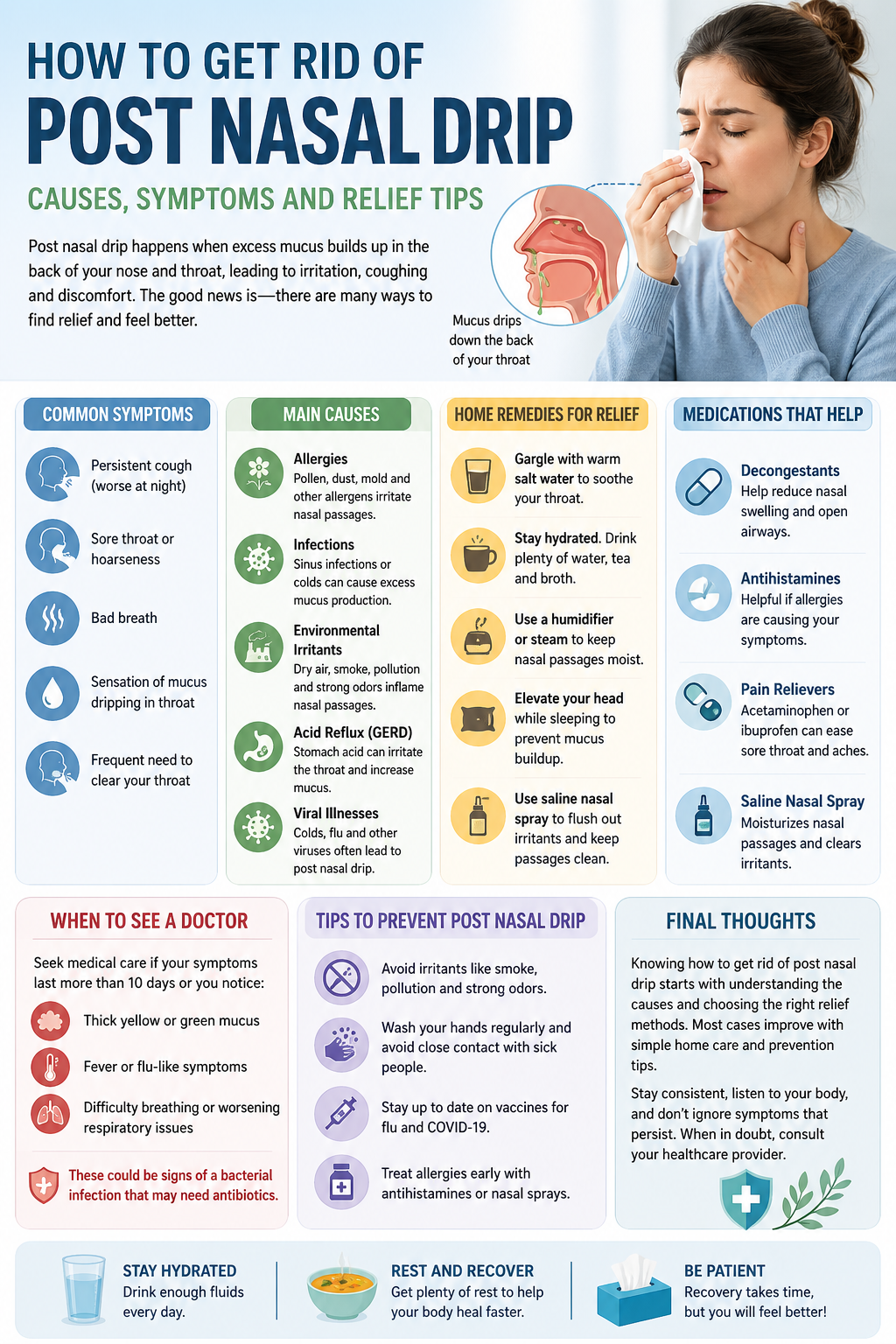
Post nasal drip occurs when excess mucus builds up in the back of your nose and throat, creating discomfort and irritation. Understanding how to get rid of post nasal drip starts with knowing that your body naturally produces mucus to protect and moisten your nasal passages. However, when this production increases due to illness or irritation, the mucus begins to accumulate and drip downward.
Learning how to get rid of post nasal drip also involves recognizing that this condition is often a symptom rather than a disease itself. It may be linked to infections, allergies, or environmental triggers, all of which cause inflammation and excessive mucus production that leads to persistent throat discomfort.
Common Symptoms You Should Not Ignore
If you are trying to understand how to get rid of post nasal drip, identifying its symptoms is an important first step. The most common signs include a constant need to clear your throat, a lingering cough that worsens at night, and a sensation of mucus dripping at the back of your throat. These symptoms can interfere with sleep and daily comfort.
Another key part of how to get rid of post nasal drip is recognizing additional symptoms such as hoarseness, sore throat, and even bad breath. These occur because the mucus irritates the throat lining over time, making early management essential to prevent further discomfort.
Main Causes Behind Post Nasal Drip
To fully understand how to get rid of post nasal drip, you need to look at its root causes. Allergies are one of the most common triggers, as pollen, dust, and mold can inflame the nasal passages and increase mucus production. Similarly, bacterial infections such as sinusitis can produce thick mucus that drains into the throat.
Another important factor in how to get rid of post nasal drip is environmental and lifestyle triggers. Dry air, smoke, pollution, and even acid reflux (GERD) can worsen symptoms by irritating the throat and nasal lining. Identifying and avoiding these triggers plays a major role in long-term relief.
Why Post Nasal Drip Often Follows Illness
Many people search for how to get rid of post nasal drip after recovering from a cold or flu. This is because your body continues producing mucus even after the main infection has cleared, as part of the healing process. The leftover mucus can collect in the throat, causing ongoing irritation and coughing.
Understanding how to get rid of post nasal drip in this stage requires patience and supportive care. Viral infections like the flu or other respiratory illnesses often leave behind inflammation, which keeps mucus production active for several days or even weeks.
Effective Home Remedies for Relief
When exploring how to get rid of post nasal drip, home remedies are often the first and most effective line of treatment. Gargling with warm salt water can soothe throat irritation and help clear mucus buildup. Staying well hydrated is equally important, as fluids thin the mucus and make it easier to drain.
Another practical approach to how to get rid of post nasal drip includes using a humidifier or inhaling steam to keep nasal passages moist. Elevating your head while sleeping can also prevent mucus from pooling in your throat, reducing nighttime coughing and discomfort.
Medications That Can Help
For those seeking faster relief, understanding how to get rid of post nasal drip may involve over-the-counter medications. Decongestants can reduce nasal swelling, while antihistamines are helpful if allergies are the underlying cause. Pain relievers can also ease throat discomfort and body aches.
In some cases, learning how to get rid of post nasal drip means using saline nasal sprays to flush out irritants and allergens. These sprays are gentle and effective for keeping nasal passages clean and hydrated, especially in dry environments.
When to See a Doctor
Although many cases are mild, knowing how to get rid of post nasal drip also includes recognizing when medical attention is necessary. If symptoms persist for more than 10 days or worsen over time, it could indicate a bacterial infection that requires professional treatment.
Another important aspect of how to get rid of post nasal drip is monitoring warning signs such as thick yellow or green mucus, fever, or difficulty breathing. These symptoms should not be ignored, as timely diagnosis can prevent complications and ensure proper care.
Tips to Prevent Post Nasal Drip
Prevention is a key part of learning how to get rid of post nasal drip and avoid recurring symptoms. Maintaining good hygiene, such as regular handwashing, can reduce the risk of viral infections that often lead to excess mucus production.
Additionally, understanding how to get rid of post nasal drip involves minimizing exposure to irritants like smoke and pollution. Managing allergies with appropriate treatments and staying updated on vaccinations can also significantly lower your chances of experiencing this condition.
Final Thoughts on Managing Post Nasal Drip
In conclusion, knowing how to get rid of post nasal drip can greatly improve your comfort and quality of life. While the condition is usually not serious, it can become bothersome if left unmanaged. Simple home remedies and lifestyle adjustments often provide effective relief.
By understanding how to get rid of post nasal drip and addressing its underlying causes, you can take control of your symptoms and prevent future occurrences. If symptoms persist, seeking medical advice ensures you receive the right treatment at the right time.