

The Continuum of Healthcare and Medical Education
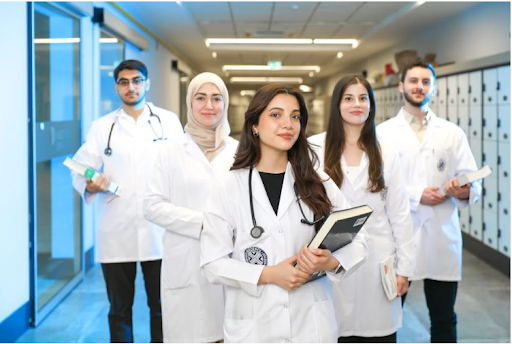
Our community’s well-being depends on excellent healthcare. This excellence starts with strong medical education. It trains the skilled professionals who care for us every day. Medical education is a lifelong journey. It begins with basic training and continues through advanced learning.
In this guide, we will explore this vital field. We will trace the path from initial medical school to specialized postgraduate training. We will also cover ongoing professional development. We will examine how leading organizations ensure high standards. Our discussion will include new teaching approaches. These include competency-based medical education. We will also look at emerging technologies like AI and telehealth. Finally, we will highlight diverse career opportunities in healthcare. Our goal is to show how education drives better health for everyone.
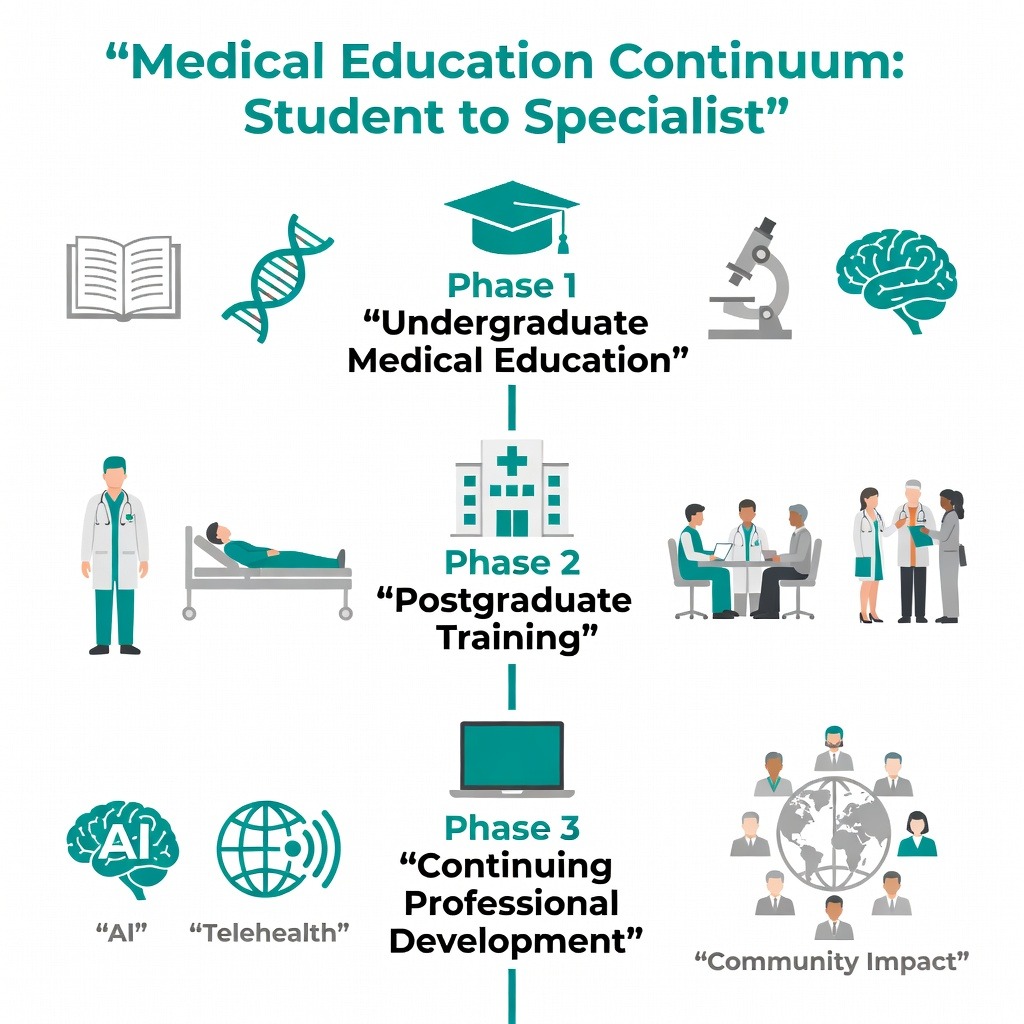
The journey of a healthcare professional is a continuous and evolving process, often referred to as the medical education continuum. This continuum is meticulously structured to ensure that practitioners are not only well-prepared at the outset but also remain proficient and adaptable throughout their careers. It typically comprises three distinct but interconnected phases: basic medical education, postgraduate training, and continuing professional development.
Basic medical education, the initial phase, is where aspiring physicians acquire the foundational knowledge, skills, and professional behaviors necessary to embark on a career in medicine. This stage, often spanning four years in medical school, aims to prepare students for diverse roles in patient care, public health, research, leadership, or medical education itself. During this period, students delve into a broad base of general medical knowledge, encompassing biological and behavioral sciences, the socio-economics of health, social determinants of health, public health principles, medical ethics, human rights, and research methodologies. Organizations like the World Medical Association (WMA) emphasize that the curriculum must be responsive to regional healthcare needs, guided by faculty expertise and accreditation standards. The WMA’s Statement on Medical Education underscores the shared responsibility among physicians, institutions, and governments to maintain high standards throughout this continuum.
Following basic medical education, graduates transition into postgraduate training, commonly known as residency. This phase is a critical period of supervised clinical education, where newly minted doctors apply their foundational knowledge in real-world settings under the guidance of experienced practitioners. With approximately 162,000 resident physicians trained last year, this stage is vital for developing specialized skills and expertise. The WMA advocates for an apprenticeship model in clinical training, characterized by progressive responsibility and interprofessional team experiences. Postgraduate programs must occur in accredited institutions and provide comprehensive supervision and assessment to ensure residents are prepared for independent practice. This period is not just about clinical skill acquisition; it also involves developing scholarly activity and navigating the demands of a rigorous schedule, often requiring institutions to focus on resident wellness and work-life balance.
The final, and arguably most enduring, phase is continuing professional development (CPD), which includes continuing medical education (CME). This lifelong commitment ensures that physicians maintain and enhance their knowledge, skills, and professional performance to adapt to rapid advancements in medical science and technology. The WMA defines CPD and CME as crucial for lifelong learning, often required for maintaining medical licenses in many jurisdictions. For instance, organizations like Public Health Ontario (PHO) offer self-approved group learning activities that count towards the Maintenance of Certification Program of the Royal College of Physicians and Surgeons of Canada (RCPSC), demonstrating a clear pathway for ongoing learning. This continuous engagement is essential for all healthcare professionals, from nurses and pharmacists to public health specialists, to stay current and provide the best possible care. The collective responsibility of all physicians to uphold high standards in medical education, for themselves, their profession, and their patients, is a cornerstone of this continuum.
The Role of AI in Healthcare and Medical Education
The advent of Artificial Intelligence (AI) is rapidly transforming both healthcare delivery and medical education. AI is no longer a futuristic concept; it is an emerging competency that medical learners must integrate into their skill sets. The Association of American Medical Colleges (AAMC) has recognized this shift, launching efforts to standardize foundational AI knowledge for all medical learners, supported by initiatives like the Josiah Macy Jr. Foundation. This curricular innovation aims to equip future physicians with an understanding of AI principles, ethics, and the ability to collaborate effectively with data scientists.
In medical education, AI is being leveraged to create quizzes, simulate patient encounters, pinpoint student struggles, and even assist in writing assessments. While these tools offer immense potential for personalized learning and efficiency, the importance of human oversight remains paramount. AI can enhance diagnostic tools, predict disease outbreaks, and personalize treatment plans, making it an indispensable part of modern medical practice. Therefore, integrating AI into the curriculum involves not just technical understanding but also a deep dive into its ethical and legal implications.
Beyond general medical training, specialized areas are also exploring AI’s potential. For instance, the application of AI in understanding and managing complex conditions like ADHD is a growing field. Innovations in Child ADHD medical education are beginning to explore how AI-powered tools can assist in early diagnosis, personalized intervention strategies, and monitoring treatment efficacy. This integration ensures that future specialists are prepared to utilize cutting-edge technology to improve patient outcomes in specific domains.
Ensuring Standards through Global Accreditation
Maintaining high standards in medical education is critical for patient safety and quality healthcare. This responsibility falls largely on accreditation bodies that rigorously evaluate medical programs. In Canada, the Committee on Accreditation of Canadian Medical Schools (CACMS) plays a pivotal role. Co-founded by the Canadian Medical Association (CMA) in 1979, CACMS works closely with the U.S. Liaison Committee on Medical Education (LCME) to ensure that all Canadian medical programs meet national standards. This collaboration ensures that physicians graduating from Canadian medical schools possess a strong academic foundation, preparing them fully for postgraduate training and practice.
Similarly, the Royal College of Physicians and Surgeons of Canada sets high standards for postgraduate medical education and continuing professional development. They define and ensure excellence through their accreditation processes, which cover residency programs and various CPD activities. The Royal College’s Maintenance of Certification Program, for example, outlines the requirements for ongoing learning, including self-approved group learning activities, to ensure specialists remain current in their fields. Their rigorous standards contribute significantly to the quality of Board-certified healthcare education across Canada, impacting the competence and professionalism of specialist physicians.
These accreditation bodies are not just gatekeepers; they are also drivers of continuous improvement. They promote program evaluation, quality assurance, and the sharing of peer-reviewed resources, often through platforms like MedEdPORTAL, which has been publishing MEDLINE-indexed resources for two decades. This global commitment to quality ensures that medical education remains robust, ethical, and aligned with the evolving needs of healthcare systems worldwide, upholding principles of global health ethics in physician training.
Modernizing Curricula: CBME and Emerging Competencies
The landscape of medical education is constantly evolving, moving away from traditional time-based models towards more outcome-focused approaches. Competency-Based Medical Education (CBME) is at the forefront of this modernization. CBME challenges the traditional structures by focusing on measurable professional competencies rather than simply the duration of training. This approach ensures that learners achieve specific, observable milestones and entrustable professional activities (EPAs) before advancing, ultimately producing more skilled and proficient healthcare providers. The AAMC has been a leader in CBME for over two decades, supporting its development, implementation, and assessment across the medical education continuum.
A key aspect of modernizing curricula through CBME is the integration of emerging competencies that reflect the dynamic nature of healthcare. Telehealth and virtual care, for instance, have rapidly become essential components of healthcare delivery, especially accelerated by recent global events. The AAMC launched the Competency-Based Education in Telehealth Challenge Grant Program to support the development and integration of interprofessional telehealth education. Seven institutions were awarded grants in 2023 to implement innovative telehealth resources, demonstrating a proactive approach to preparing future clinicians for remote care.
Quality Improvement and Patient Safety (QIPS) are another critical area of emerging competencies. QIPS curricula are designed to instill a patient-centered approach, emphasize health equity, and foster interprofessional collaboration. The AAMC’s QIPS Competencies Version 2, released in September 2024, highlights the importance of these skills for all medical learners, ensuring they can identify systemic issues, implement solutions, and continuously enhance the quality of care.
Beyond these, modern medical education emphasizes problem-based learning and early clinical exposure. McMaster University, for example, is renowned worldwide for its innovative three-year curriculum that integrates problem-based learning with early hands-on experience in a distributed medical education model across multiple campuses. This approach allows students to develop critical thinking and clinical reasoning skills from the outset, preparing them for the complexities of real-world practice.

Specialized Pathways and Trending Healthcare Majors
The healthcare industry is a vast and diverse ecosystem, offering a myriad of specialized pathways beyond traditional medical doctor roles. The demand for skilled professionals in various health fields is projected to grow faster than the average for all occupations, with about 1.8 million openings projected each year. This robust growth fuels interest in trending majors that offer rewarding careers and significant impact on community health.
Pharmacy education, for example, is a highly respected and rapidly evolving field. Pharmacists are consistently rated among the most trusted health professionals, with a median annual wage exceeding $128,570. The skills developed through a Doctor of Pharmacy (Pharm.D.) program are highly transferable, leading to diverse career opportunities in hospitals, community practice, managed care, the pharmaceutical industry, and public health. Many institutions, like the University of Health Sciences and Pharmacy in St. Louis, offer comprehensive Pharm.D. programs, sometimes with integrated dual degrees such as an MBA, allowing students to earn two terminal degrees efficiently. The rich history of St. Louis medical education, particularly in pharmacy, highlights the long-standing commitment to developing healthcare leaders.
Public health is another critical area experiencing significant growth. Epidemiologists, who investigate patterns and causes of disease and injury in human populations, are projected to see a 27% job growth rate, with a median salary over $80,000. Public health professionals are essential for community well-being, focusing on prevention, health promotion, and addressing broader determinants of health.
Health care administration is crucial for the efficient functioning of healthcare systems. With a projected job growth rate of 28% and an average salary of $104,000, these professionals manage the operations of hospitals, clinics, and other healthcare organizations. Their work ensures that healthcare services are delivered effectively and sustainably.
Data science in healthcare is an emerging and highly sought-after field, with a job growth rate of 36% and a median annual salary exceeding $100,000. These experts use advanced technology and statistical analysis to extract insights from large health datasets, improving decision-making, research, and patient outcomes.
Beyond these, nursing specialization, micro-credentials in specific healthcare areas like cancer rehabilitation or cannabis education, and other allied health professions offer unique opportunities to contribute to community health. These specialized pathways, often supported by institutions like Michener Institute, provide focused training to meet specific demands within the healthcare sector.
Trending Majors within Healthcare and Medical Education
The healthcare sector’s rapid expansion and technological advancements have created a dynamic environment for career growth, particularly in specialized fields. Here are some of the most trending majors that promise significant impact and career versatility:
- Medical and Health Services Management: Often referred to as Health Care Administration, this field focuses on the business side of healthcare. Professionals in this area ensure that hospitals, clinics, and public health departments run smoothly. They manage budgets, personnel, and daily operations, playing a vital role in healthcare delivery. The projected 28% job growth rate and average salary of $104,000 reflect the increasing complexity and demand for effective leadership in healthcare.
- Data Science in Healthcare: This interdisciplinary field combines statistics, computer science, and domain expertise to analyze complex health data. Data scientists in healthcare are instrumental in identifying trends, predicting disease outbreaks, personalizing treatments, and optimizing resource allocation. With a remarkable 36% job growth rate and median annual salary over $100,000, it’s a field at the cutting edge of medical innovation.
- Pharmacy: As highlighted earlier, the role of a pharmacist extends far beyond dispensing medications. With a median salary over $130,000, pharmacists are medication experts involved in patient counseling, drug therapy management, and public health initiatives. Specialized pathways include clinical pharmacy, managed care, and pharmaceutical research. The skills acquired are highly transferable, offering diverse career paths in various settings.
- Public Health and Epidemiology: These fields are crucial for understanding and improving the health of communities. Public health professionals work on disease prevention, health promotion, and policy development. Epidemiologists, in particular, study the distribution and determinants of health-related states or events in specified populations. Their work is vital for responding to public health crises and developing effective interventions, with epidemiologist jobs projected to grow by 27% and median salaries over $80,000.
- Global Health: With increasing interconnectedness, understanding health issues on a global scale is paramount. Programs in global health prepare professionals to address health disparities, infectious diseases, and health policy challenges across borders. This interdisciplinary training often integrates public health, social sciences, and international relations.
- Healthcare Informatics: This field bridges the gap between healthcare and information technology. Professionals in healthcare informatics manage and analyze health information, develop health IT systems, and ensure data security and privacy. Their expertise is increasingly vital as healthcare becomes more digitized.
These trending majors underscore the vast opportunities within healthcare, emphasizing the need for interdisciplinary training and leadership development to meet the demands of a complex and evolving industry. The projected 1.8 million annual openings across health care occupations signal a future rich with possibilities for those pursuing these specialized pathways.
Institutional Support and Addressing Systemic Challenges
High-quality medical education programs require robust support systems, dedicated faculty resources, and sustainable financing mechanisms. Institutions like McMaster University, with over 4,000 faculty members spread across distributed campuses, exemplify the extensive human resources needed to deliver comprehensive medical training. Faculty development is crucial, ensuring educators are equipped with the latest pedagogical techniques and clinical expertise.
However, medical education also faces significant systemic challenges. Economic barriers are a major concern, with 71% of recent medical graduates borrowing to finance their education. The median annual wage for pharmacists, at $128,570, provides a glimpse into the potential returns, but the initial debt burden can be daunting. Addressing these financial hurdles, perhaps through scholarships, grants, and thoughtful loan policies, is essential to ensure that medical careers remain accessible to all talented individuals, regardless of socioeconomic background.
Diversity in admissions is another critical area. A holistic review process, which considers applicants’ experiences, attributes, and academic metrics, helps foster a diverse student body that better reflects the communities they will serve. This approach recognizes that intellectual ability, motivation, and character are as important as academic scores.
The demanding nature of medical training, particularly during residency, often leads to concerns about work-life balance and physician wellness. Institutions are increasingly implementing support systems to mitigate burnout and promote mental health among residents. Policies related to flexibility in medical training and physician resource planning, as advocated by organizations like the Canadian Medical Association, aim to create a more sustainable and supportive environment for learners. Addressing issues such as rural and remote practice needs is also vital to ensure equitable distribution of healthcare professionals.
The Future of Professional Development and Community Impact
The commitment to lifelong learning through continuing medical education (CME) and professional development is paramount for physicians to maintain their skills and adapt to rapid advancements. Organizations like the Royal College of Physicians and Surgeons of Canada’s Maintenance of Certification Program provide structured frameworks for this ongoing learning, often requiring specific CME credits. This continuous engagement ensures that practitioners can integrate new knowledge, such as the latest applications of AI in diagnostics or the evolving best practices in telehealth, into their daily practice.
The impact of this robust educational continuum extends directly to community health. Well-trained physicians, equipped with modern competencies and continuously updated knowledge, are better positioned to address the health needs of diverse populations. This includes understanding and responding to population health challenges, advocating for health equity, and contributing to physician resource planning to ensure adequate healthcare access.
Furthermore, medical education is increasingly emphasizing social accountability and climate action. The AAMC, through its communities, fosters discussions and resource sharing on topics like climate action, recognizing the profound impact of environmental factors on public health. Initiatives aimed at improving nutrition education, integrating arts and humanities into medical curricula, and actively responding to public health crises like the opioid epidemic demonstrate a holistic approach to preparing physicians for broad community impact.
The community pharmacy, for instance, serves as a highly accessible point of care, playing a vital role in public health initiatives, medication management, and patient education. The evolution of pharmacy education, with its focus on transferable skills and interdisciplinary training, directly contributes to strengthening these community-level healthcare services. The continuous evolution of healthcare and medical education is a driving force behind healthcare innovation, ensuring that our healthcare workforce is not only competent but also compassionate, adaptable, and deeply committed to the well-being of the communities they serve.
Frequently Asked Questions about Medical Education
What are the core components of the medical education continuum?
The medical education continuum consists of three main phases: basic medical education (medical school), postgraduate training (residency), and continuing professional development (CPD) or continuing medical education (CME). This lifelong journey ensures that healthcare professionals are initially well-prepared and continuously update their knowledge and skills throughout their careers.
How does competency-based medical education (CBME) differ from traditional models?
CBME shifts the focus from the time spent in training to the achievement of specific, measurable professional competencies. Unlike traditional models that might emphasize curriculum coverage over a set period, CBME ensures that learners demonstrate mastery of skills and knowledge, often through observable milestones and entrustable professional activities (EPAs), before advancing. This approach aims to produce more consistently skilled and proficient healthcare providers.
What are the fastest-growing career paths in healthcare education today?
Several healthcare career paths are experiencing rapid growth due to evolving healthcare needs and technological advancements. These include data science in healthcare (36% growth), health care administration (28% growth), epidemiology (27% growth), and specialized areas within pharmacy. These fields offer strong job prospects and competitive salaries, reflecting the increasing demand for professionals who can manage, analyze, and innovate within the complex healthcare landscape.
Conclusion
The pursuit of healthcare excellence is inextricably linked to the quality and evolution of medical education. From the foundational years of basic medical education to the rigorous demands of postgraduate training and the lifelong commitment to continuing professional development, every stage is designed to cultivate competent, ethical, and compassionate healthcare professionals. Leading organizations, through their accreditation processes and advocacy for modern curricula like CBME, ensure that educational standards remain high and responsive to emerging needs.
As we look to the future, the integration of technologies like AI and telehealth, alongside a focus on essential competencies such as quality improvement, patient safety, and health equity, will continue to shape the training of our healthcare workforce. Addressing systemic challenges like economic barriers and promoting diversity in admissions are crucial for fostering a resilient and representative professional community. By investing in robust educational systems and supporting the professional evolution of our healthcare providers, we reinforce our commitment to community well-being and build sustainable medical systems that benefit everyone.